


It is Sophidas, 25th of the Month of Toil, in the year 97

Daramos Minister


The Dominion of Great Houses

Seventh Cultist

Daramos

Tzukyn

Galasaar

Kitzra

Ritan

The Elven city-states are held together in a Dominion of Great Houses. This alliance has existed for thousands of years and has been one of the greatest challenges to any of the houses taking full control.
Despite this, the House Elves have adapted and developed methods to compete and defeat each other. They were struggling for more power, prestige and wealth before the arrival of Humanity.
When they did arrive, everything changed. A great disease washed over the land, crippling the vast cities and severing communication and trade between them. Then came the conquests and more Elves died in the fighting. The House Elves have not truly recovered from the plague that crippled them nearly a century before. But their struggle continues.
"What have we done to deserve such a fate?"
- Patriarch, Lord Kalzin, former Daramos family head comment on the plague


Play As...
The Dominion

General Characteristic
Race
Elf
Language
Common, Elven, Tzuven (Tzukyn), Kitzran (Kitzra)
Height
162cm - 195cm (5'3 - 6'4)
Hair Colours
Brunettes, Dark Browns, Black, Blonde, Gingers
Eye Colours
Hazels, Greens, Browns, some Blues
Skin Tone
Ranging from Pale, Tanned and intermediate/darker tone
Ethos
Any
Naming Convention
Asur, Aeldari, LOTR [Minus the Gaelic/Celtic] (Daramos, Tzukyn, Galasaar, Kitzra, Ritan), Aztec & Mayan (Tzukyn, Ritan)


The Dominion Rundown
Themes
Divided Empire, Nobles Houses, New World Great Power, Religion, Individualise Warriors
Aesthetics
House Daramos - Gods, Temples, Reverence, Serenity & Tranquility, [Architecture] Over-the-top and grand Temples/places of worship. Vibrant Colours. (Think WH40k Imperium but medieval and not grim-dark)
House Tzukyn - Knowledge, Power, Education, Libraries, Enlightenment, [Architecture] Mournhold (ESO) with Aztec-Influences
House Galasaar - Individualised Warriors in Elegant Armour, Great Halls, Fortresses, [Architecture] Cyrodiilic (Elder Scrolls)
House Kitzra - Wealth, Prestidge, Influence, Power, Warehouses, [Architecture] Summerset Isle (ESO)
House Ritan - Steadfast, Glory, Greatness, Great Gardens, [Architecture] Breton (ESO) but far more grand and draped in glory
Unique Aspects
World Under Threat, Suffering Invasion, Inter-House Politics

General Attitudes Towards

Attitude Scale:
Allied
Friendly
Cordial
Neutral
Unfavourable
Antagonistic
War

Gallia:
Friendly
Dumanon:
Antagonistic
Custodes:
Neutral
Azuchi:
Neutral
Daurans:
Neutral
Asturias:
Antagonistic
Komanali:
Unfavourable
Banen’Rhûn:
Antagonistic
Dynasty:
Neutral
Sasanshahr:
Neutral
Ancient Dwarves:
Neutral
Amu-Tep:
Unfavourable
Turak:
Neutral

The Dominion and Aether Users:
Although House Soletera is but myth and legends for most of the Dominion, the scars of the Dark Age run deep through the generations and history involving the use of Aether has often been categorically bad. Often seen as evil in nature, Aether is shunned in most Houses of the Dominion and few would dare to trust it or its user. - House Tzukyn makes an exception to this rule as they adopt a more cautious approach in seeing it as a deadly and potent phenomenon that ought to be studied and in the hopes of a few within the house, mastered.
The Dominion and Devourers:
Devourers in the regalia of their True Form are the typical caricature of the twisted and mutated spawn of the Sixth House. So close is the sight of such great evil to the myths that terrified Elven children in bedtime stories that seeing one alone may cause a mental break. The Elves are not aware of the real nature of Devourers, nor understand what they even are. Should an Elf maintain their senses, their most logical conclusion would be that they’re seeing a Soletera monster that escaped its deserved fate of death.

When Playing...
When creating an Elf, its important to know which House’s region they belong to. This will effect them as much as any country would for a human from the Old World! There are some Elven fundamentals however, such as worship of the Twenty One and One, an ill-regard for humans, and a feeling of superiority over everyone else native to ‘their’ continent.
Different Houses and individual settlements will have different priorities within the complicated faith - but primarily, every elf will worship The Sun, The Moon and The Star - and be informed of The Emperor and The Empress.
The houses themselves are unique in many ways.
House Daramos fancies itself the cultural and moral linchpin of the Dominion, though being the leader is self-styled. Politicking is rife here, and predictably, their Patrons are The Emperor (IV) and The Empress (III). Daramos is known to present the most opposed to the influences of Humanity over the Dominion.
House Tzukyn are fixated on information, and control of it. They hold intellect above might; but are not above numerous and petty rivalries and grudges. Their Patron Gods are The Magician (I) and The Hierophant (V). Tzukyn generally oppose the influences of Humanity, though they have made pragmatic exceptions regarding Gallia.
House Galasaar is a giant, standing as a soldier against Dumanon, the Banen’Rhûn and the Komanali. Fortunately, the realm’s best fighters hail from here; accordingly, their Patron God is The Chariot, known also as ‘The Seventh’. Galasaar vilifies Dumanon and shows general animosity towards the rest of Humanity. Gallia, however, have aided the House and are received with some favour so long as aid continues.
House Kitzra is gold-minded and the most open of the Houses to the changing ways of the world. Chiefly concerned with merchant matters and invaluable to the Dominion, despite their cozy relationship with Gallia. Their Patron Gods are The Lovers (VI) and The Wheel of Fortune (X). Unlike their kin, Kitzra is the most accepting of Gallia. This stance is not shared with Dumanon nor Asturias in which they active aid the fight against them.
House Ritan is a formidable foe, or at least, was. Human warfare against the adamant Asturias has caused them to rethink their formations in recent years - from legendary duels to group-skirmishes. They hold The Celestial Cities, and a special place in Elven history for their connection to The Sun (XIX) , The Moon (XVIII) and The Star (XVII). Ritan is much like Daramos, has resisted the influence of Humanity and has only made exception for Gallia for its services in understanding and defeating Asturian formations.
"That's no way to fight."
- Lord Honna, Famous House Ritan Seventh Cultist refering to Humanity


The History of The Dominion

The Elven race has its roots in many legends that span a great many millennia before, the tale of the Empress and Emperor are chief among them. Elves and all their cities had been scattered across the continent and came to dominate all the land that stretched from ocean to ocean. During this golden age, many Elven stories and myths found their origin. As well as the time before and after this period being the birth of many of their Gods in some shape or form.
Before the ascension of the Empress and Emperor into the realm of gods, they designated six significant families as the guardians of the race. Each family had cities under their care and was charged with seeing the Elven people flourish.
The success of these ancient houses has often been a subject of debate over the centuries, especially where it concerns inter-house politics and vying interests. However, something that the majority of the Elven population, along with Elven scholars, agree on is that no matter their misgivings. They were victims, as were all Elves, of the villainy of The Sixth House.


When Humanity did arrive, they brought with them a plague that devastated the crowded cities of the Elves. Wiping out close to half of the Elven population on the continent in the next two decades before their recovery really began. While recovering from an unseen threat, Asturias and Dumanon started their wars of conquest. Taking more and more settlements for the weak and dying Elves.
The High Elves now have to balance their relationship with four different invaders from across the ocean, and even the Banen'Rhûn operating in the northern half of the continent. Their society is under attack from all sides, and their suffering seems far from over.


The Elven Dark Age is a period after the ascension of the Empress and Emperor (III & IV). This Dark Age saw much of the communication between the Elven cities was lost or severely diminished, technology became stagnant and much of this history was lost to time.
The Sixth House is practically universally blamed for this event, with many stories speaking of how it betrayed the Elven race in an attempt to appease unseen dark gods of malignant intent. Empowering themselves with gifts of evil, enriching their house and unleashing vile creatures upon the continent to tear down Elven civilisation. It was only through the purging of the Six House did Elven kind recover.
And the Elves did recover and thrive in the multiple centuries since the Dark Age, is marked with steady social and technological progress, the founding of new cities, the building of new roads and the expansion of the Elven population. But also spots of war, conflict and strife between the Great Houses, their Cadet Houses and other subservient houses.
The Great Houses avoided coming to blows with one another, but their cadet houses and other houses associated with them were far more willing to be belligerent towards one another. Settlements were taken by one family at the expense of another, battles were fought and machinations by involved parties were quite elaborate. Though total war as experienced by Humanity never really occurred


The Great Plague ravaged the Dominion for two-years, killing two-fifth to two-thirds of the Great Houses population by estimations of Elven scholars. Even those who did survive often had debilitating side-effects long after the plague subsided. The day-to-day life of the Dominion was crippled, and the path to recovery was fraught with many conflicts over food, people and disputes of ownership.
It is hard to say that the Dominion has truly recovered from the effects of the plague. Large portions of the population were killed within 2 years and the Great Houses are still contending with the aftermath and consequences of decisions made during and after those years to hasten their recovery.

Edict of Acrabera issued in Year 1260 (New Era 96)
Originally proposed to the Galasaar Patriarch by the Lord General of the Rangers, Dinenbenn, Based on his decades of warfare with the Komanali, the Banen’Rhûn and the Imperial threat. The former Galasaar Army Model was presented to the other houses for wider adoption after further reviews.
The collaborative effort between veteran leaders of each house, with notable efforts from House Ritan, who has fought against the invading humanity, with advice from Gallia, produced a framework standardisation.
This has became known as the Dominion Standard Model.
"An independent house? How bizarre."
- A common sentiment among the Great Houses


The Dominion:
Civilization & Politics

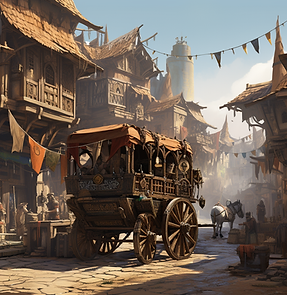
The House Elves enjoy a culturally rich and artistic society, where more emphasis is placed on beauty and meaning rather than function in what they create. Many Elven cities are as much of a work of art as they are a metropolis. This favour for beauty and meaning flows throughout almost all of their culture, from buildings, paintings, statues, farming methods, armour and more.
The Elves were the most technologically advanced group in the New World before the arrival of Humanity, now they have competitors who are more developed than they are in areas different from their specialisation. This is not to say the Elves are far behind, rather where they excel is not the same.
Politically, the House Elves are dominated by the Five Great Houses. House Daramos, House Galasaar, House Kizra, House Ritan, House Tzukyn. There was once a sixth, House Soletera, though their continued existence is treated as mere rumours in Elven society. The other Great Houses have not existed in complete peace, often they will engage in conflicts of various forms except for total war as would be common in the Old World.
The Dominion Council maintains cohesion between houses, mediates problems, and attempts to resolve issues peacefully.


House Daramos
House Daramos, The First House, has its capital in the old seat of power of the Empress and Emperor, the great city of Acrabera. Charged by ancient decree to oversee the central and centre-western lands of the continent, House Daramos often prefers to take upon the role as the ‘ruling’ house overall Elven kind. A sentiment that is not generally accepted among the other Houses.
The House is famed for its religious teachings and learnings, of pondering the greater meaning of the House Elven pantheon and for representing most of them in some grand manner amongst its greatest cities. Those of House Daramos, its cadet branches or servant houses all tend to have strong religious inclinations compared to the other houses as it takes a more core part of their identity.
Daramos is not without its own scandals and political machinations, its famed rivalry with the Northern House of Galasaar has seen lands changing, and such conflicts are limited to servant houses, rarely the cadet houses and officially never the main house.
Unique to Daramos are the Inquirers, established in the aftermath of the war with House Soletera, this group are mandated to investigate all the houses for illegal alchemical experimentation or service to demons. - Due to the nature of their reason to be, they are not often well-received and must walk a fine line to prevent political fallout.

House Daramos


House Galasaar
House Galasaar, The Third House, is the largest of Elven houses and is situated in the Northern half of the continent. The reason for its size is mostly speculated to be because of the historic difficulty of taming the northern lands, but those astute enough to know the terrain doubt this assertion. A more likely reason discussed privately among scholars is that half of the northern continent belonged to the Sixth House.But the mention of this outside of private conversation can be met with ostracisation, degradation of reputation and even rotten food being thrown at the one to utter the name out of fear it will bring calamity once again.
Beyond its fame for its large size, Galasaar is also known for its significant military and large Cult of the Seventh presence. Unlike all other houses, Galasaar maintained a professional militia alongside its elite Seventh Cultists. The main house is known to have never once hired the Custodes, but it has fought them more than once. It is also the prime target for attacks from the Banen'Rhûn and conflicts with the Komenali. Something which has been handled poorly even before the arrival of humanity.
The plague that scoured the lands dealt a severe blow to Galasaar, and as it tried to reunite its lost cities on the eastern edges of the continent, it found them occupied by new masters. Dumanon had moved in.
The conflict between Dumanon was inevitable, but Galasaar suffered in the wars against The Imperium as its kin would against Asturias.

House Galasaar


House Ritan
House Ritan is located in the south of the New World and is the most beleaguered House among its peers. Certainly, the one that has been hit the hardest by the arrival of humanity due to several wars against Asturias. It shares a border with both Asturias and Sasanshahr.
Ritan has a mixed reputation, its sister houses each excelling in areas it did not. But at the same time, each suffered in areas Ritan did not. This left the House in a not-so-modest place as being recognised as one of more, if not the most powerful among the Great Houses, though its influence and strength were often tested by its neighbours.
Now it is locked in a joint effort with House Tzukyn with great aid given by House Daramos to stem the tide of Asturian ambition as it spreads its way through the southern continent. Despite its losses during the Great Plague and then again against Asturias and its human way of conducting warfare, the House has remained stalwart and starting, battered, bruised and bleeding though it is. Certainly, House Ritan has been the most ill-affected in recent times, and assuredly it is the most experienced of the High Elves in fighting against Humanity.

House Ritan


House Tzukyn
House Tzukyn, The Second House, has its territory primarily located in the south of the centre of the continent and spilling into the northeastern part of the southern continent. It has been the most peaceful of the houses in political machinations, preferring instead to posture itself as the House of Scholars, of learning and education. - It is within the borders of the House that the largest ruined city of a now-dead race resides.
The House has become famed for its great libraries, universities, and ancient Precursor cities, and it is often credited with the greatest leaps in scientific advancement and much to the irritants of House Daramos, philosophical works. However, its fame, eccentric researchers, and preference for pushing the boundaries of knowledge have created several scandals with aetheric experiments gone wrong or out of hand. The House is frequently hounded by Daramos Inquirers, its over-eagerness to push the boundaries of sciences and understanding goes beyond what many consider ethical. - A point of contention that has only soured the relationship with House Daramos, and any other house that dares suggest that its activities need to be investigated.
The House calls few peoples their enemies, preferring the safety and peaceful nature of the scholarly pursuit. However, along with House Ritan, House Tzukyn has suffered the most from the invasions of Asturias and has been on the frontline in preventing the spread of the Kingdom. They have not been greatly effective in stemming the tide, the Seventh Cult of Tzukyn is not particularly famed or well-known for its martial prowess and encounters with the human invaders have not ended well.

House Tzukyn


House Kitzra
House Kitzra, The Fourth House, the Great Merchant House of the East. House Kitzra occupies the eastern centre of the New World with grand showcases of Elven culture and various trading posts that litter the territory of the other houses.
Kitzra is regarded as the wealthiest among the Great Houses and regards itself as the bleeding edge of High Elven cultural advancement. It is also perhaps the most aggressive despite its preference for trade over martial arms like Galasaar. In truth, its aggression comes from attempts to better its influence and economic strength through whatever is necessary within reason. It hosts the largest indentured workforce, mainly of poor Elves or captured Komanali, and is the most avid employer of The Custodes.
While many of the other Houses struggle with the encroaching Asturias and Dumanon, Kitzra has been in the unique position to open up more friendly ties with Gallia and establish trade relations with them. Gallia has in turn aided Kitzra's position in the fight against its Old World Rivals.

House Kitzra


House Soletera
The Sixth House, the Condemned, the Unspoken. House Soletera was like the other houses, bestowed authority upon it by the Empress and Emperor and is rumoured among learners and scholars to have held territory in the North. However in the centuries leading up to the Dark Ages they had lost their way, dabbling in the deepest and darkest creations and powers. Becoming tainted and power-hungry. Eventually, their acts brought about a severe degradation of communication and travel between the houses, and it was only through the Houses uniting did they destroyed House Soletera. - It is also not an uncommon belief that the God Card, The Tower, is a representation of House Soletera.
House Soletera is presumed to have been wiped out, though in truth it is hard to know for certain. The house lives on in myth and legend among the commoner communities and often is used as the universal boogeyman or to mark someone as deranged, mad or dangerous. An Elf being referred to as a Soletera is considered one of the highest of insults, especially for the nobility.


Independent Houses
Originally, the concept of the Independant Houses, or Minor Houses, came from the Dark Age of the Elves when the Sixth House severed communication and made travel highly dangerous. In the time since then, many were absorbed back into the Great Houses or fought over.
When the Great Plague spread across the lands, the Minor Houses were not spared its wrath and suffered greatly as did the Dominion as a whole. In the aftermath of the disease, many towns and cities were isolated from their Great Houses and spent years fending for themselves. - This gave rise to a new wave of independent houses scattered across the Dominion with their own strongholds and lands that were separated by abandoned roads and settlements.
The minor houses that have managed to persist through the decades generally have worked tirelessly to remain so. Their independence guaranteed by making any aggressive action against them is too costly, or more commonly by becoming more useful to the Great Houses should they remain autonomous.
More controversially, some of these Houses have even sided with Asturias or Dumanon since their invasions. Many Elves are not sympathetic to any house that does this willingly, but many are seen to have been ‘conquered’ regardless of how they ended up there.


Generally, House Elven nobility and positions of authority differ greatly depending on the Great House it is associated with. It is further diluted as it is more centred on the place itself rather than the rank held. Two individuals of the same title, would not hold the same rank as it depends on their family name and its closeness to the main line of the great house, and on the prestige or prominence of what they are entitled to.
In the summer of Clarity 1260, the Council of Five reformed the hierarchy of the Dominion of the Great Houses as part of a larger reorganization in a direct response to the defeats to the Asturian and Imperial invasion, restructuring titles and adding new stations.
Patriarch / Matriarch and/or Lord / Lady of the Great House
The Lords of the Houses are few, there exist two for each of the Great Houses, one for the husband and the other for the wife, that are used to distinguish the Great House rulers from the rest. These rulers always have the last name of their Great House, even if they are adopted or appointed to the position from outside of the bloodline.
High Lord / Lady (Written as ‘Surname’-enul)
High Lords primarily are used for leaders of cadet branches or subservient houses from the main House. These people typically hold more than one significant city under their rule, or a large tract of land that they are the guardian of. The High Lords sometimes get involved in direct conflict with other cadet branches or subservient houses, even those from other Great Houses.
Sharodus (Sharodel (M) / Sharovir (F))
Introduced by the reforms, the Sharo, an official short-hand term or reference, is a position given in the absence of defined leadership among nobles Lords, Ladies and Hrotans. The Sharo’s authority takes precedence over any house affiliation and they are empowered by the Dominion as a whole. Because of their nature, it is not given to those within the lands of the Great Houses but to those among the independent houses or frontier regions were they are needed most.
"Is the 'one', the Fool or the Tower?"
- A debate that has endured centuries, with no answer in sight

The Dominion:
Faith

The Twenty-One and One, and God Cards, are terms sometimes used to describe the Dominion Elf Pantheon by noting its large size. Most Great House Elves will have a vague awareness of their gods but only know a few. These few tend to be the same no matter where the Elf is from as they are considered the 'core' gods of their pantheon.
The Empress and Emperor are well known among the Houses, and they are credited with the founding of their great Dominion. Although few worship them as much as The Star, The Moon and The Sun who have become the primary trio revered by all High Elves of any stature.
Reverence to the other God Cards is given depending on the Great House, family, profession or personal relationships and history with the gods themselves. Not all the gods will play a major role in the life of the High Elves, and this has resulted in some being vastly more popular than others.

Null. - The Fool
I. - The Magician
II. - The High Priestess
III. - The Empress
IV. - The Emperor
V. - The Heirophant
VI. - The Lovers
VII. - The Seventh
VIII. - Strength
IX. - The Hermit
X. - The Wheel of Fortune
XI. - Justice
XII. - The Hanged Man
XIII. - Death
XIV. - Temperance
XV. - The Devil
XVI. - The Tower
XVII. - The Star
XVIII. - The Moon
XIX. - The Sun
XX. - Judgement
XXI. - The World

"What is wine?"
- An Elf, upon being asked if they wanted some wine.

The Dominion:
Norms & Culture


The Elves are, broadly speaking, more similar than they are different. Their overarching religious faith in the Twenty-One and One and common understanding of how their civilisation came to be unites them in the face of outside adversaries. When they are left to their own devices, internal conflict between the houses is bound to blossom.

People of The Great Houses
Before the great plague ravaged the land, Elves were not permitted much mobility that did not befit their station. However, with the loss of so much life, and the need to have certain work and jobs fulfilled, the movement of people became more common. Even inter-house mingling has increased as cooperation among the houses has greatly increased since the arrival of humanity. - This state of affairs led to the rise of nomadic guilds of labourers and crafters who would travel from city to city, being employed in various contracts to fulfil work as was needed by the settlement. These groups of Elves have been greatly aided in their lifestyle by the introduction of horses from the Old World, primarily from Gallia.
Generally, the Elves are dubious of Humanity and often would loathe the presence of a human based purely on racial animosity. Gallia has otherwise managed to negotiate with House Kitzra and other houses since Dumanon forcefully annexed many of their colonies. Kitzra has gone further with its ties with Gallia than even Daramos would deem acceptable, the introduction of nobility to one another’s culture, and the mutual appreciation of beauty, art, intricacy and meaning over brutal regimented function has allowed the two to communicate on a deeper level, strengthening relations between Gallic colonials and Kitzra.
While Kitzra makes its bed with Gallia, Daramos, Galasaar and Ritan have all expanded the role of their militia forces much to the irritants of the Seventh Cultists. Elven warfare is becoming more like Human warfare as they try to prevent the total collapse of their society, though members of the Seventh Cult often firmly believe that untrained, unprepared and weak Elves who have not committed to the path of Triumph are more of a liability than a saving grace. - The Seventh Cultists are the most famed warriors among the Elves, each one said to be worth fifty human soldiers. Their method of warfare is religious, bound in legend, traditions and sanctity. Total warfare in the manner of humanity is atrocious.
Unique to House Tzukyn, and partially adopted by some families in House Ritan, Elven nobles and commoners alike have begun using names derived from The Precursors. Tzukyn is known to have romanticised these truly ancient people, seeing them as beings with a wealth of knowledge that far exceeds their own. The reverence of this little-understood race has drawn the ire of House Daramos who have accused the house on several occasions of degrading Elven culture. - Even now, in the fight against Asturias, the Tzukyn grant titles and give names to those who fight based on legends of deciphered Precursor texts. The Litany of Retribution as they have named it details the beginning of a campaign of justice waged against an enemy of a similar visage as humanity long before Elves kept records.


Instituted by the Edict of Acabera
-
The Dominion Militia
This officially permits raising of levies within Dominion lands by the nobility against outside threats. It also lays out the standard equipment for various levy types, the expected daily rations and standardised training regime and length of time the training takes. All of which is provided by the nobility through each House.
-
Warden Cadre, or Wardens
The most controversial part of the standard model, one which required a whole new command structure to work as intended. This was a push to create professional soldiers that were not tied to the rituals and traditions of any house, the Seventh or any other god, but instead tied to loyalty to the Houses as a whole. Forming the heavy armoured backbone of Dominion army, supplied with standardised arms and armour. They are bound by an oath to serve and protect The Dominion, avoiding the inter-house politics or preferences.
These cadres are led by a Cadre Captain (Often denoted by a gold shield pin),
Cadre Chiefs act as their ‘Officers’ (Often denoted by a silver shield pin),
Veteran Wardens fill in other roles of responsibility,
Then the rest of the Wardens.
Recruits are known as initiates.


Marriage, Social Status & Sexuality
Marriage and love are of increasing importance to the Elven people. With the decline in their population, it is paramount that they do that most fundamental thing; reproduce. They have many celebrations and customs around love, led by several of their Gods, including The Lovers, The Sun, and The Empress - this comes with many traditions, and plenty of reverence.
Of course, the Houses are no strangers to arranged marriage and strategic alliances. ‘Love’ has perhaps become interchangeable with ‘Duty’ in recent years, especially for those of a higher class. It’s become a booming business for matchmakers, with the chief drive being to find compatible Elves in the prime of their lives. An unfortunate consequence of this push is the way their culture has been driven back into more traditionalist days.
Before the terror on their population, the Elves were on the verge of full acceptance of more ‘deviant’ lifestyles, including both polyamoury and homosexuality. Their faith takes no issue with either, and society was on its way to legitimising both. However, there is now a desperate need to serve the realm in the bedroom - and it remains, more firmly than ever, that only heterosexual marriages are legal. Other such trysts are extremely taboo, but not against the law.
"I can't say I particularly enjoy the savages that squat our land."
- High Lord Ammassivi, Refering to the Komenali

The Dominion:
Reputation & Interactions

The Elves are often regarded, at least by themselves, as the pinnacle of society. That there is nothing greater than their cities, art and culture. The idea is pervasive throughout the social classes of Elf society and has led to general disgruntlement from their Dwarven neighbours or general dislike from the Komenali.

The Elves are a substantial factor in human political intentions in the New World. They play a key role in keeping Humanity in check along with other competing Great Powers.
Asturias And Dumanon see the Elven cities as weak, and an adversary that can be overcome in their desire for conquest. Gallia takes a more diplomatic and lower approach, with Gallia instead seeking to align with the Cities to curb its Old World rivals. - Sasanshahr is late to the New World game, and their stance has yet to be solidified truly.

With Elves
Even amongst themselves, the Elven Cities have had moments of conflict, petty squabbles and long-term disagreements. These have not entirely disappeared, rather they have been put to a secondary importance with the arrival of Humanity.
The Komenali however had a long-held resentment with the Elves. Those who believed themselves to be better, of more import and more civilised. Looking down upon the Komenali and even sparking conflicts with them over land rights or religious history.

The Galasaar settlements of the Elves have been consistently attacked and harassed by the Banen'Rhûn. They have become infamous in Elven society for their aggression. If not for Humanity, they would be the number one enemy.

Most Elves are unaware of the Amura, but those that have met one would note their strange appearance. Most report an innate disgust, and a tugging suspicion around their serpentine features - worsened by how long the Amura lived secretly not so far south of the Elven realm. Regardless, they are hardly a political priority.

With the Turak living in isolation, and otherwise being wary of Elven kind. Most know little about them or have reason to care for them. Ritan has the most exposure, though few have much awareness of the people.

The Ancient Dwarves have long been isolated from the High Elves, and so when they finally opened their gates to trade. They did so with the Elves. The relationship has been amicable between the two.
The Custodes on the other hand, have had a much longer relationship with the Elves. Often they are sought out for their military skills to be used against their rivals or hunting beasts of some kind. Although their willingness to be hired by Humanity has soured relations.

Author: Hokan
Contributions by: Oakbug & Hugh-Gi-Oh
Page Created by: Hokan